|
Kabbalah: Shabti, Ushabti: The History of Ushabti History of the Shabti and Ushabti
The word shabti applies to the figurines prior to the 21st Dynasty of Egypt. After the 21st Dynasty, the term ushabti was used. Shawabti were a separate class of funerary figurines from the Thebes area during the New Kingdom. Shabti incantation prayerInscriptions were hand carved on the lower half of the figurine's body. The writings often contain a portion of the 6th chapter of the Egyptian Book of the Dead, translated as:–
In rare cases different chapters of the Book of the Dead are written. Furthermore, shabtis often mention the name and the titles of the owner, without the spells of the Book of the Dead. The spell is already known from the Coffin Texts spell 472, which is found on some mid-Twelfth Dynasty coffins from Bersheh (about 1850 BC). From wikipedia: shabti
|
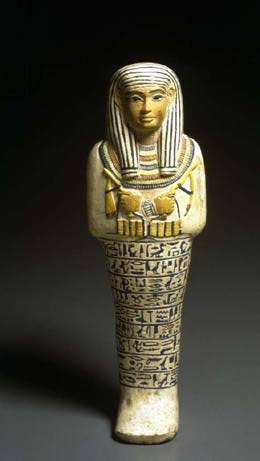 Shabti were used from the Middle Kingdom (around 1900BCE) until the end of the Ptolemaic Period (about 2,000 years later).
 Ushabti Figurine. This shabti figure the finest details and highest
quality you will find anywhere! Made of resin and hand painted. Height: 9
inches. Length: 2.25 inches. Width: 2.25 inches. Crafted with Resin.
Weight: 2.5 pounds.
Ushabti Figurine. This shabti figure the finest details and highest
quality you will find anywhere! Made of resin and hand painted. Height: 9
inches. Length: 2.25 inches. Width: 2.25 inches. Crafted with Resin.
Weight: 2.5 pounds.